


The Landscape of Luxury Tourism Real Estate in Colombia
By 2026, Colombia’s luxury tourism real estate investment landscape has reached an exceptional point of maturity. Following years of sustained growth, the country has positioned itself as the "new luxury player" in Latin America, competing directly with traditional powerhouses such as Mexico and Costa Rica.
Progress in Tourism Real Estate Investment (2025-2026)
Luxury property investment has evolved from a niche market into a strategic economic driver, fueled by a synergy of macroeconomic and digital factors.
-
Exchange Rate Dynamism: In 2025, the Colombian peso experienced significant appreciation, enhancing its appeal to international capital. Approximately 7.3% of new housing sales nationwide are driven by foreign investors or Colombians residing abroad—a figure that exceeds 10% in key regions such as Bolívar (Cartagena) and Magdalena (Santa Marta).
-
Digitalization and Fintech: The rise of fractional investment platforms has democratized access to the luxury sector. It is now common to see projects funded through 100% digital models, allowing global investors to participate in boutique developments with accessible entry points.
-
Sustainability as a Standard: For 2026, luxury is no longer defined solely by marble finishes, but by ecological certification. Projects featuring solar panels, smart water management systems, and low-environmental-impact materials are currently reporting the highest appreciation rates.


Investment "Hotspots"
1. Cartagena’s Northern Zone (Serena del Mar & Manzanillo)
This sector has solidified its status as the most ambitious urban development in the region.
-
Featured Projects: Playa Escondida and San Marco within Serena del Mar.
-
Key Appeal: World-class urban planning including the Serena del Mar Hospital (operated by Fundación Santa Fe de Bogotá), private beach clubs, and elite connectivity.
2. Santa Marta and Pozos Colorados
Santa Marta is experiencing a boom in "Nature-Centric Luxury."
-
Featured Projects: Marawa and new branded residences (residential units managed by luxury hotel chains).
-
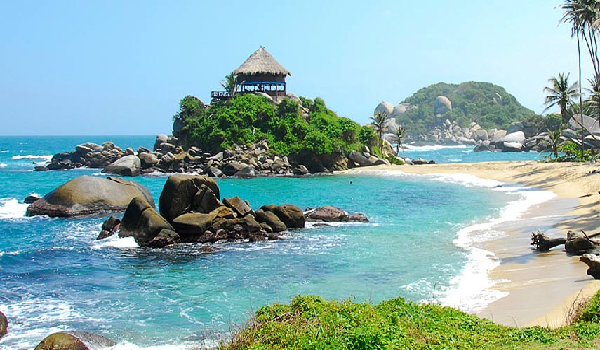
Key Appeal: Proximity to the Sierra Nevada and Tayrona National Park, offering a lifestyle that merges high-end comfort with premium ecotourism.
3. Medellín and Eastern Antioquia
In this region, luxury focuses on mountain retreats and smart apartments in El Poblado.
-
Trend: Work-from-anywhere. Medellín remains the premier destination for high-level digital nomads, driving investment in designer apartments with hotel-grade services (luxury apart-hotels).
🌟 Colombia’s Premier Luxury Attractions
Colombia has diversified its "beauty portfolio" to offer ultra-luxury experiences that are difficult to replicate elsewhere:
-
Nautical Tourism & Insular Privacy: In the San Bernardo Archipelago and Rosario Islands, luxury yacht charters and stays at private island villas—such as Isla Pelícano—have become the gold standard for elite travelers.
-
Cultural & Natural Immersion: Traditional coffee estates in the Coffee Axis have been transformed into 5-star boutique hotels (e.g., Hacienda Bambusa), offering private tastings and helicopter tours over the plantations.
-
Signature Gastronomy: Bogotá and Cartagena are now mandatory stops on the global culinary circuit. Restaurants like Leo (Bogotá) and Celele (Cartagena) offer deep-dive research into Colombian biodiversity, attracting international critics and gourmands.


Strategic Location of Cartagena, Colombia: A Global Connection
Cartagena de Indias stands as a premier Logistics and Tourism Hub of the Greater Caribbean. Its geographical position places it at the "center of the world" for transatlantic trade and interoceanic routes.
🇺🇸 United States: The Gateway (Nearshoring)
Cartagena is the natural logistical partner for the U.S. due to its proximity and free trade agreements.
-
Maritime Connectivity: The Port of Cartagena handles approximately 60% of bilateral trade between Colombia and the U.S. It is a key node for nearshoring, allowing companies to manufacture in Colombia and deliver to East Coast ports (Miami, New York) in record time (approx. 3-5 days).
-
Air Connectivity: Rafael Núñez International Airport offers direct routes to major hubs such as Miami, Fort Lauderdale, New York (JFK), Atlanta, and Dallas, facilitating investor and luxury tourism flow in under 5 hours.
🇪🇺 Europe: The Transatlantic Bridge
In 2026, the city has significantly enhanced its connection with the "Old Continent."
-
Direct Flight Surge: Key direct routes are now well-established. Plus Ultra has increased its Madrid frequency, and World2Fly operates direct Madrid-Cartagena flights. Strategic connections also exist to Amsterdam and Zurich (via KLM/Edelweiss).
-
Port Efficiency: Ranked as the most efficient terminal in Latin America, it connects directly with the ports of Rotterdam, Hamburg, and Algeciras, serving as the distribution center for premium Colombian exports like coffee and avocados.
🌏 Asia: The Panama Canal Connection
Cartagena serves as the premier transshipment port for cargo arriving from Asia destined for the East Coast of the Americas.
-
Canal Proximity: Located just miles from the Panama Canal, it accommodates Neo-Panamax vessels coming from China, Japan, and South Korea.
-
Re-distribution Center: Many Asian firms utilize Cartagena’s Free Trade Zones for assembly or storage to distribute goods across the Caribbean and South America.
🇦🇪 UAE and Middle East: The New Horizon
The relationship with the United Arab Emirates (UAE) has evolved from diplomatic to strategically commercial.
-
Logistical Investment: UAE sovereign wealth funds have shown significant interest in Colombian infrastructure, positioning Cartagena as a vital node for the Gulf countries' food security.
-
Luxury Connectivity: Cartagena has emerged as the preferred Caribbean luxury destination for high-net-worth travelers from the Middle East, primarily connecting via Madrid or Istanbul.
Key Competitive Advantages
-
Multimodality: Maritime connections to 840 ports in 150 countries.
-
Weather Safety: Located outside the hurricane belt, ensuring 365-day operations.
-
Free Trade Zones: 124 authorized zones offering significant tax and logistical benefits for foreign investment.
-
Cruise Tourism: The city receives 97% of cruise passengers arriving in Colombia.

The emergency contact list:
-
National Police: 112
-
Highway Police (Traffic): #767 (Ideal for intercity travel).
-
Civil Defense: 144
-
Fire Department: 119
-
Red Cross: 132
Quick Tip: Remember that 123 is the universal emergency number in Colombia (similar to 911), which can coordinate with all of the agencies listed above.
Contact Information for the Principal Embassies
-
🇬🇧 United Kingdom (British Embassy): +57 (601) 326 8300
-
🇪🇸 Spain (Spanish Embassy): +57 (601) 622 00 90
-
🇫🇷 France (French Embassy): +57 (601) 638 14 00
-
🇩🇪 Germany (German Embassy): +57 (601) 423 26 00
-
🇦🇪 United Arab Emirates (UAE Embassy): +57 (601) 742 87 82